
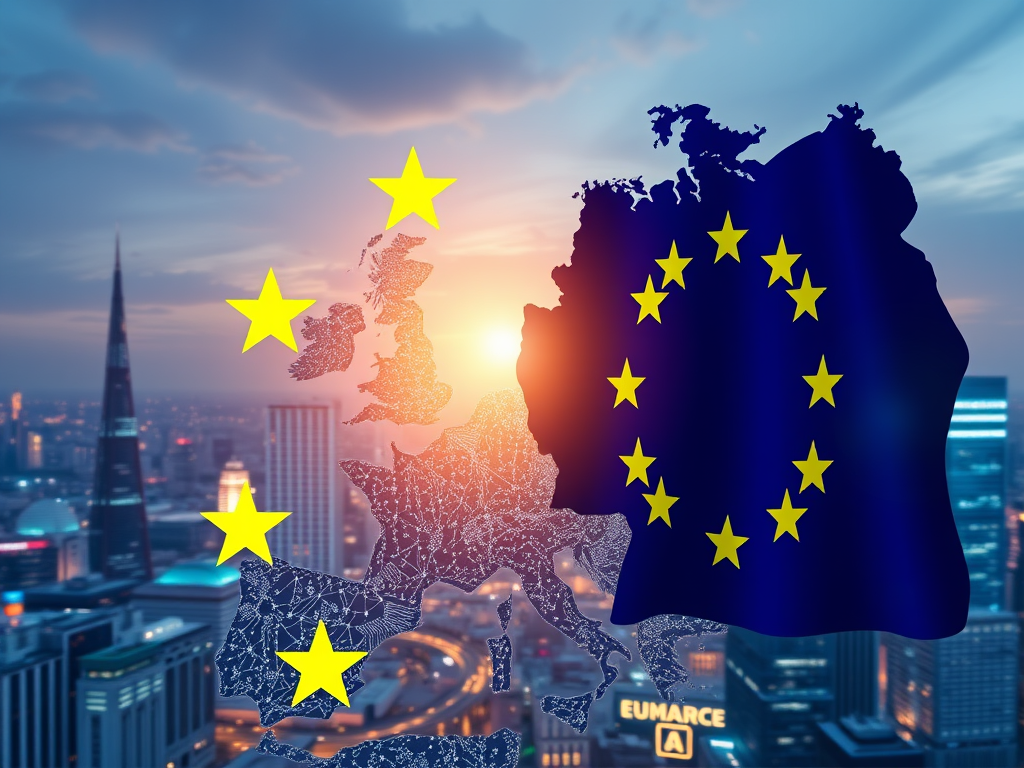
What Germany’s Move Signals for Europe
The reports that ChatGPT has crossed the 700-million-user mark, with some already citing 750 million weekly actives, tell us something profound: artificial intelligence has become infrastructure. This is no longer an early-adopter novelty or a playground for hobbyists. It is a system relied upon by almost ten percent of the global population every week. The speed of that adoption curve places AI on the same trajectory as the Internet and mobile networks—technologies that rapidly moved from innovation to necessity.
Germany’s Sovereign Model
In this context, Germany’s announcement that it will pursue a sovereign deployment of OpenAI’s model stands out. It is more than a technology pilot; it is a political act. Sovereignty here means ensuring that when critical services—from public administration to financial compliance—make use of AI, the underlying systems operate within European legal frameworks and under European control. It is an attempt to prevent Europe’s digital backbone from being entirely dependent on U.S. providers.
The move does not imply shutting borders to technology. Instead, it reflects a determination that Europe’s privacy rules, security standards, and transparency obligations must apply to the infrastructure citizens and businesses use daily. For Berlin, the sovereign ChatGPT project becomes both a test case and a signal to the rest of the EU: we cannot simply consume AI as a global commodity.
Anchoring in European Initiatives
Germany’s step is not an isolated gesture. It fits into a wider continental push for digital sovereignty. The EuroHPC program represents Europe’s investment in high-performance computing infrastructure, designed to reduce dependency on U.S. and Chinese platforms. Gaia-X aims to establish a federated European cloud architecture, keeping data within EU-regulated environments. The EUDI Wallet initiative pushes toward a pan-European digital identity framework, embedding privacy and interoperability into its foundations.
Regulatory frameworks reinforce this trajectory. The AI Act, NIS2, the Cyber Resilience Act, and DORA all underline Europe’s determination to define the boundaries of how critical technologies are deployed, secured, and governed. Germany’s sovereign ChatGPT deployment is a natural extension of these efforts, an attempt to bring AI within the same sovereignty architecture.
Why Sovereignty Matters
The debate is not about efficiency. It is about dependency. If AI becomes the substrate for digital life—shaping identity verification, compliance, education, and even healthcare—then leaving control outside European jurisdiction creates systemic risk. A sovereign deployment is a hedge against that risk. It allows Europe to shape the rules of engagement, to enforce compliance with its own standards, and to ensure that the values of transparency, accountability, and privacy are not optional add-ons but part of the foundation.
Europe’s Test Case
Germany’s sovereign model may serve as a template, but it may also expose the limits of Europe’s strategy. Can sovereign deployments match the pace of innovation while remaining compliant and secure? Can they convince enterprises that European control does not mean compromise on capability? These are the questions that will determine whether Germany’s move becomes the start of a continental blueprint or remains a symbolic experiment.
What matters is not whether ChatGPT has 700 million or 750 million weekly users. The real measure of success is whether Europe can ensure that when its citizens and industries adopt AI at scale, they do so on infrastructure aligned with European resilience and European values.
Editor’s Note: The Quantum Sovereignty Layer
At The Quantum Space, we see sovereignty not only in terms of cloud, compute, or AI models. The same urgency applies to cryptography. The rise of sovereign AI deployments will collide directly with the shift to post-quantum cryptography, where Europe has already set migration deadlines: high-risk systems by 2030, medium-risk by 2035. AI may accelerate the risks—through automated codebreaking, AI-assisted cyberattacks, or data-harvesting that anticipates “harvest now, decrypt later.” If Europe wants genuine digital sovereignty, sovereign AI models must be secured with sovereign cryptographic frameworks. Quantum resilience is the unseen layer beneath the sovereignty debate, ensuring that Europe’s trusted steps today can support the quantum leaps of tomorrow.




Leave a Reply