
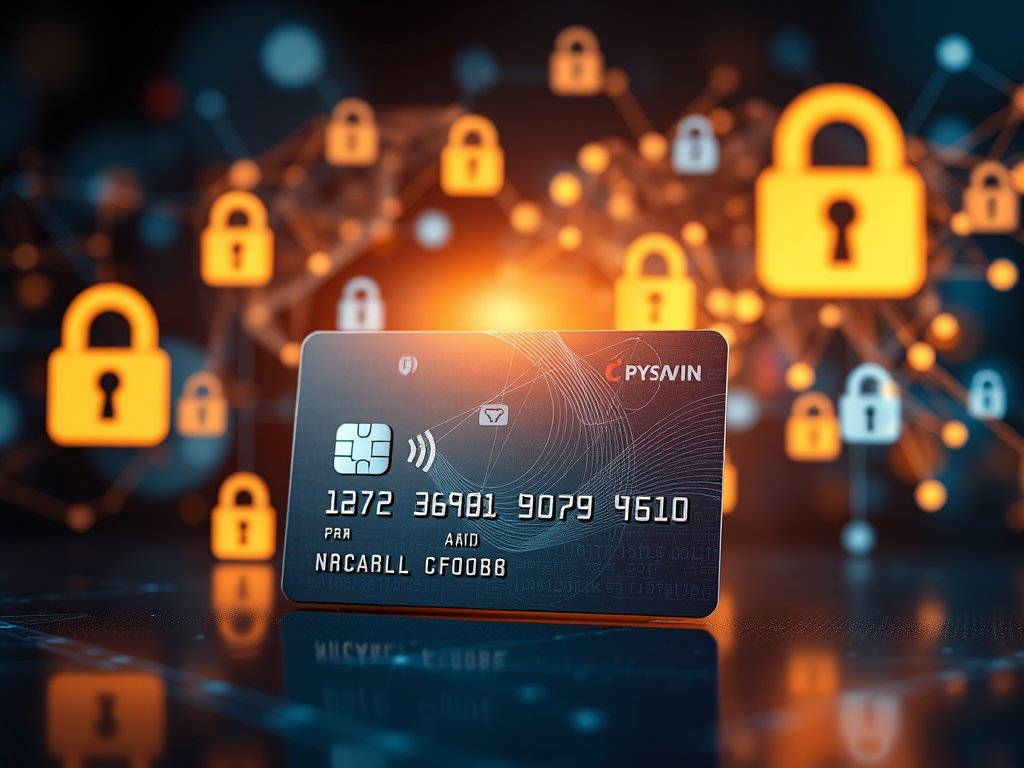
How Smart Cards Became the Backbone of Global Trust
For more than three decades, smart cards have powered some of the most critical interactions in modern life. Payments, identity verification, mobile network access, public transport, healthcare systems and secure access control all rely on a device small enough to lose behind a sofa cushion. A card is the most unglamorous piece of trust technology we have, and yet it remains the strongest, most widely deployed and most reliable root of trust in the world.
Part of the reason few people notice this is because card technology has matured so thoroughly that it has become infrastructure rather than innovation. It is no longer introduced to citizens with great fanfare, nor does it crowd the headlines of technology magazines. It simply exists, everywhere, running quietly in the background, proving identities, securing transactions and anchoring trust. This makes the smart card ecosystem one of the most misunderstood, and under-appreciated, technology landscapes. It is not declining despite predictions that smartphones and cloud platforms would make the physical card obsolete. Quite the opposite. It is expanding, evolving and consolidating its position as the foundation of secure digital interactions.
About This Series
This feature is the first instalment in a three-part editorial series created for the TRUSTECH season. Across these three articles, The Quantum Space examines the technologies that many organisations treat as background infrastructure but which, in reality, carry the weight of global trust. Smart cards and their secure microcontrollers sit at the heart of that discussion.
The series takes a structured view. Part 1 looks at why smart cards remain the backbone of payments, identity, telecoms and mobility, despite decades of predictions that they would be replaced by mobile apps or cloud-based identity services. Part 2 moves deeper into the supply chain, exploring how secure elements, card operating systems, fabrication facilities and certification regimes form a tightly controlled ecosystem that underpins global security. Part 3 looks ahead to the next decade. It examines how post-quantum cryptography, composite cryptographic schemes, AI identity and embedded secure elements are reshaping the future of trusted hardware.
This is not nostalgia for a legacy technology. It is a recognition that smart cards, in all their evolving forms, remain the most successful mass-market deployment of cryptography and hardware-anchored security. They provide trust at planetary scale and continue to adapt to new threats, new regulatory requirements and new use cases.
As the industry gathers in Paris for TRUSTECH, this series aims to provide a clear, evidence-led understanding of why smart cards matter now more than ever, how they are evolving and why they will continue to sit at the centre of digital trust infrastructures long after the physical card disappears from view.
This first part of our three-part series sets the stage, exploring the scale and significance of smart cards in everyday life, why they have outlasted multiple waves of “cardless” predictions and what qualities make them unmatched in their domain.
The Scale of a Global Trust Platform
When people talk about “global platforms”, they tend to refer to cloud hyperscalers, search engines, social networks or mobile operating systems. Yet none of those reach as deeply or as reliably into daily life as the combined smart card infrastructure. It is difficult to name another technology that serves billions of people across so many sectors while maintaining strict security guarantees and stable long-term functionality.
Payment cards with secure chips now represent the majority of issued payment credentials worldwide. These cards support EMV security models that run cryptographic operations directly inside tamper-resistant secure elements. This ecosystem processes trillions of transactions each year and provides one of the most mature models of hardware-anchored cryptography that exists at civilian scale.
In parallel, SIM cards and their embedded successors support mobile network access across essentially the entire planet. Although they are often discussed as “telecom hardware”, SIMs are simply smart cards packaged into a different form factor. They execute network authentication routines, store cryptographic keys for operators and enforce roaming and access rules. The fact that billions of users carry a SIM without thinking of it as a security device is perhaps one of the greatest compliments to the robustness of the design.
National identity systems are another area where the scale is immense. Countries across Europe, the Middle East, Latin America and Asia issue secure identity cards that anchor government services, border control and citizen authentication. These cards often last ten years or longer, which means governments design them with a level of security and reliability that can withstand a decade of evolving threats. No cloud-based solution offers equivalent predictability or assurance without a hardware anchor.
Finally, transport networks around the world rely on contactless smart cards to manage fare collection, access control and passenger flow. Whether in London, Singapore, Dubai, Vienna or countless other cities, transport cards carry cryptographic credentials that enable quick, offline, high-throughput authentication under heavy daily load.
In each of these sectors, smart-card infrastructure is not supplementary. It is the backbone.
The Properties That Make Smart Cards Unique
What makes smart cards so resilient, even in an era of rapid digital transformation? The answer lies in a combination of qualities that no other mainstream technology has managed to replicate in a single package.
Smart cards provide tamper resistance at the physical level. Their secure microcontrollers are engineered to prevent or detect probing, glitching, micro-measurement and other forms of hardware attack. They also include countermeasures for side-channel attacks, ensuring that credential extraction remains practically impossible. Very few consumer devices include such protections and none do so at the unit-cost or energy budget of a smart card.
They also benefit from a strictly governed lifecycle. A card has a clearly defined manufacturing, personalisation, issuance, usage and retirement process. Every step is monitored, certified and audited. The card operating system enforces strict rules about key usage, file access, update permissions and application execution.
Furthermore, smart cards operate reliably for years without a firmware update or network connection. They do their job offline, within milliseconds, without relying on ephemeral cloud services. This is not only useful but essential for many security and identity scenarios. A citizen presenting a national ID cannot depend on a stable network link to authenticate themselves. A transport barrier cannot wait for the cloud to respond before letting a person through during rush hour.
Lastly, the smart-card ecosystem benefits from extraordinary standardisation. EMVCo, ISO, ICAO, GSMA and national security agencies all provide formal certification frameworks. These certifications are not symbolic. They require extensive testing, threat modelling and security evaluation. This level of industrial discipline is rare outside of defence or aerospace sectors.
Payments: The Most Successful Cryptographic Deployment in History
If one sector illustrates the strength of smart cards, it is payments. The global transition from magstripe cards to EMV chip cards is one of the most successful security upgrade programmes ever undertaken. It reduced fraud significantly, created a unified global specification and enabled secondary innovations like contactless payments and mobile wallets.
When consumers “tap” a card, they are not performing a simple radio identification. They are initiating a cryptographic dialogue between the card and the payment terminal. The card generates one-time cryptograms, derives session keys inside hardware, signs specific transaction data and binds the transaction to the terminal. These operations happen inside an isolated secure element and are never exposed to the outside world. The payment industry recognised early that cryptography is only as secure as its private key storage. Hardware was, and remains, the only model that guarantees non-extractable payment keys at scale.
The irony is that many modern mobile wallets still emulate the card. Even when the physical card disappears, the secure element concept stays. Apple, Google, Samsung and others all rely on either embedded secure elements or trusted execution environments to deliver EMV-level security. The card itself may go digital, but the principles stay the same.
National Identity: Cards as the Foundation of State-Level Trust
The rise of national identity cards is another testament to the strength of hardware-anchored trust. Governments need durable, predictable and highly secure credentials that remain valid for up to a decade. A purely digital identity, stored only in a phone or cloud service, cannot satisfy the requirements of border agencies, law enforcement or civil administration without a secure hardware anchor.
Smart ID cards hold private keys that identify citizens to government systems. They carry certificates for online authentication, digital signatures and access to e-government services. They allow offline verification at borders and provide interoperability between national systems and international standards.
Germany’s recent proof-of-concept for a quantum-secure ID card illustrates the direction the sector is heading. Rather than replacing cards with something “more digital”, governments are evolving the card architecture to meet quantum threats. Composite cryptography, where classical and post-quantum algorithms coexist inside the same secure element, is now emerging as the migration strategy for long-lived identity documents. Getting PQC into chips this early demonstrates how seriously governments take the coming transition.
The smart card remains the most appropriate vessel for high-assurance citizen identity, even in a world of smartphones and mobile wallets.
Telecom: The Hidden Smart Card in Every Phone
Consumers often overlook the fact that the SIM card is a smart card. It is the anchor of mobile network security. It enables authentication to the network, enforces operator-defined rules, manages roaming and supports mobile payments and value-added services.
The evolution to eSIM and iSIM does not eliminate the smart-card model. Instead, it integrates the secure element directly into devices. This shift reflects the same principle seen in payments: even when the physical format disappears, the secure hardware anchor endures. The existence of criminal SIM farms and large-scale misuse of SIM infrastructure also highlights how central SIMs remain in both trust and abuse ecosystems.
Transport and Public Access: The Demand for Speed, Reliability and Offline Trust
Public transport networks pose a unique challenge. They require secure, fast and offline-capable authentication for millions of passengers daily. Smart cards deliver exactly that. They operate without network connections, process authentication within milliseconds and survive years of daily wear.
As open-loop payments gain traction in transit systems around the world, smart cards still underpin the mechanism. When a passenger taps a bank card or phone at a gate, the system still relies on an EMV cryptographic model.
The card ecosystem once again becomes invisible, even as infrastructure becomes more modern and more flexible.
Why Predictions of a “Cardless Future” Keep Failing
The idea that smart cards will be replaced by smartphones or cloud-based identity systems resurfaces every few years. Yet these predictions consistently overlook the fundamental dependency that digital identity has on secure hardware.
A digital wallet without a secure element is simply a software application. A mobile-first identity without hardware anchoring is a high-value impersonation risk. Cloud identity platforms also require device-bound keys, mutual authentication and secure enclaves to verify device integrity.
In every case where digital identity or payments have evolved, they have evolved toward the smart-card model, not away from it.
The card does not disappear. It dissolves into the infrastructure.
Conclusion: A Technology That Endures Because It Works
Smart cards have remained central to our identity and security infrastructure because they deliver qualities that no other mass-market technology can combine. They provide physical tamper resistance, hardware-backed cryptography, offline operation, long lifecycle assurance and predictable certification. They also operate quietly, reliably and without user maintenance.
In an era where cyber risks grow more sophisticated, where AI can generate synthetic identities and where quantum computing threatens established cryptography, the need for secure hardware becomes more pressing, not less.
Part 2 of this series goes deeper, examining the supply chain, the secure microcontrollers that power smart cards and the political stakes of maintaining control over the global trust infrastructure.
Smart cards are not a remnant of the past. They are the silent foundation of the digital future.




Leave a Reply