
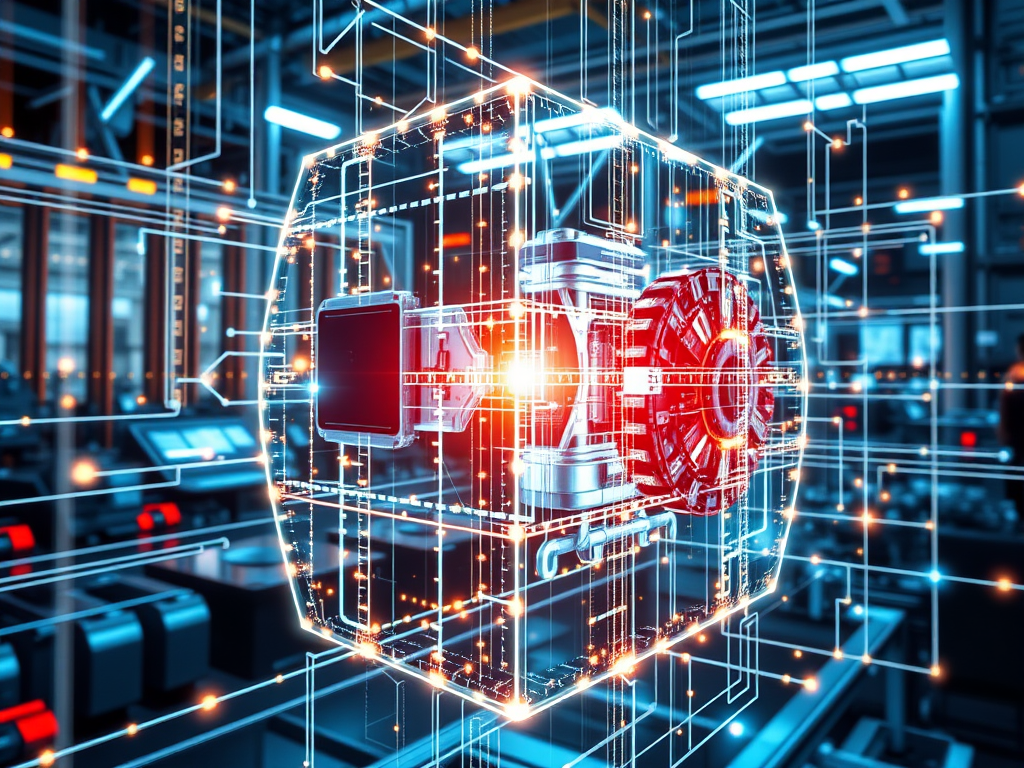
The concept of a digital twin has emerged as a cornerstone of Industry 4.0, particularly in the context of the Internet of Things (IoT). A digital twin is a virtual model that mirrors a physical object, system, or process, synchronized in real-time through data collected from IoT devices. By leveraging IoT’s connectivity and data collection capabilities, digital twins enable industries to simulate, monitor, and optimize operations with unprecedented precision. This article explores the role of digital twins in IoT, their applications across industries, and critical considerations for cybersecurity and software licensing protection. Written for readers with a basic understanding of the topic, it provides detailed insights supported by real-world examples and sources as of July 20, 2025.
What is a Digital Twin in the Context of IoT?
A digital twin is a dynamic, virtual representation of a physical entity—be it a single component, a product, or an entire system—that mirrors its real-world counterpart through continuous data exchange. Unlike static simulations, digital twins rely on IoT sensors and devices to provide real-time data on parameters like temperature, pressure, location, or performance. This bidirectional interaction allows the twin to reflect the current state of the physical object and enables predictive analysis, scenario planning, and optimization.
In IoT ecosystems, digital twins integrate with technologies like artificial intelligence (AI), cloud computing, and big data analytics to process vast streams of data from connected devices. According to Gartner, the digital twin market is projected to reach $379 billion by 2034, driven by IoT integration and advancements in AI and cloud computing.1
The technology is categorized into three types:
- Component Twin: Represents a single part of a larger system, such as a sensor in a machine.
- Product Twin: Models an entire product, integrating multiple component twins to capture its life-cycle.
- System Twin: Represents interconnected systems, showing how multiple twins interact, such as a factory floor or a power grid.
These categories enable industries to apply digital twins at varying levels of complexity, from individual assets to entire ecosystems.
How Digital Twins Work with IoT
Digital twins rely on IoT infrastructure to function. IoT devices, such as sensors and actuators, collect real-time data from physical assets. This data is transmitted to a digital platform—often hosted in the cloud—where it updates the twin. The twin uses this data to simulate the asset’s behavior, predict outcomes, or test scenarios without risking physical operations. For example, a digital twin of a wind turbine might use IoT data on wind speed and blade vibration to predict maintenance needs.
The process involves several steps:
- Data Collection: IoT sensors gather data on physical parameters (e.g., temperature, speed, or energy consumption).
- Data Transmission: Data is sent to a cloud or edge platform via secure networks.
- Modeling and Analysis: AI and analytics process the data to update the twin, enabling simulations and predictions.
- Feedback Loop: Insights from the twin can trigger actions in the physical world, such as adjusting a machine’s settings.
This integration enhances efficiency, reduces downtime, and supports data-driven decision-making across industries.
Industry Examples of Digital Twins in IoT
Digital twins, powered by IoT, are transforming industries by enabling real-time monitoring, predictive maintenance, and process optimization. Below are real-world examples illustrating their impact:
1. Manufacturing: Optimizing Production Processes
In manufacturing, digital twins simulate factory operations to improve efficiency and reduce costs. General Electric (GE) uses digital twins in its Predix platform to monitor jet engines and industrial machinery. IoT sensors on engines collect data on temperature, pressure, and fuel consumption, feeding a digital twin that predicts maintenance needs and optimizes performance. For instance, GE’s digital twin of a jet engine can detect early signs of wear, reducing unplanned downtime by up to 20% .2 This approach minimizes costly repairs and enhances operational reliability.
2. Energy Sector: Predictive Maintenance for Wind Farms
Siemens employs digital twins in its wind energy operations to enhance turbine performance. IoT sensors on wind turbines collect data on vibration, wind speed, and power output, updating a digital twin that simulates turbine behavior. Siemens’ MindSphere platform analyzes this data to predict mechanical failures, enabling proactive maintenance. A 2023 case study showed that Siemens’ digital twins reduced turbine downtime by 15% and increased energy output by optimizing blade angles.3 This demonstrates how IoT-driven twins improve asset longevity and efficiency.
3. Healthcare: Securing Medical Devices
In healthcare, digital twins model medical devices and patient systems to improve outcomes. Medtronic uses digital twins to monitor IoT-connected pacemakers, collecting data on heart rate and device performance. The twin simulates device behavior to detect anomalies, such as battery degradation, ensuring timely interventions. A hospital in 2024 used a digital twin of its network, including connected medical devices, to test security protocols against ransomware attacks, improving preparedness without risking patient safety.4
4. Smart Cities: Urban Management
Digital twins are revolutionizing urban planning in smart cities. Singapore’s Virtual Singapore project creates a digital twin of the city, integrating IoT data from traffic sensors, weather stations, and building management systems. This twin simulates traffic flow, energy consumption, and disaster scenarios, helping city planners optimize infrastructure. In 2022, the project reduced traffic congestion by 10% by adjusting signal timings based on twin simulations.5
Cybersecurity Challenges and Solutions for Digital Twins
The integration of digital twins with IoT introduces significant cybersecurity risks due to the increased attack surface created by connected devices. A digital twin’s reliance on real-time data flows makes it a prime target for cyber-attacks, as compromising the twin can disrupt physical operations or expose sensitive data.
Cybersecurity Risks
- Data Integrity Attacks: If a malicious actor manipulates IoT sensor data, the digital twin may provide inaccurate insights, leading to faulty decisions. For example, a compromised twin of a power grid could show a false status, causing outages or safety hazards.6
- Denial-of-Service (DoS) Attacks: Digital twins depend on continuous data streams, making them vulnerable to DoS attacks that disrupt data flow, hindering real-time decision-making.
- Vulnerable IoT Devices: Many IoT devices use weak communication protocols or outdated firmware, creating entry points for cyber-attacks. A 2022 Nozomi Networks report noted 560 vulnerabilities in IoT and operational technology (OT) devices, particularly in manufacturing.7
- Unauthorized Access: Weak access controls can allow attackers to manipulate a digital twin, potentially altering critical processes like manufacturing or healthcare operations.
Cybersecurity Solutions
To mitigate these risks, organizations adopt robust cybersecurity strategies:
- Zero-Trust Architecture: Implementing zero-trust models with micro-segmentation and multi-factor authentication (MFA) ensures only authorized users access the twin. For example, a utility company used a digital twin to simulate cyber-attacks on its grid, identifying vulnerabilities and applying MFA to secure access.8
- Data Encryption and Integrity Checks: Encrypting IoT data transmissions and using validation checks ensure data integrity. NIST’s cybersecurity framework for digital twins emphasizes encryption and continuous monitoring to prevent tampering.9
- Virtual Testing Environments: Digital twins can simulate cyber-attacks, acting as a “honey trap” to detect vulnerabilities. A 2023 NIST study demonstrated this with a digital twin of a 3D printer, detecting cyber-attacks by analyzing emulated data.
- IoT Security Maturity Model: Kaspersky’s IoT security maturity model helps define “sufficient security” levels for digital twins, prioritizing measures like patch management and network segmentation.10
These strategies ensure digital twins remain secure, leveraging their own capabilities to enhance cybersecurity through simulation and testing.
Software Licensing Protection in Digital Twins
Digital twins, as software-driven systems, face risks of intellectual property (IP) theft and unauthorized use, necessitating robust software licensing protection. The rise of digital twins increases vulnerabilities to reverse-engineering, tampering, and piracy, particularly in industries like manufacturing and healthcare where proprietary models are critical.
Challenges in Software Licensing
- IP Theft: Digital twins often contain proprietary algorithms and data models. Unauthorized access can lead to IP theft, compromising competitive advantages.11
- Software Tampering: Attackers may modify the twin’s software to manipulate outcomes, such as altering a manufacturing process to produce defective products.
- Unlicensed Use: Without proper licensing controls, digital twin software can be copied or used beyond authorized scopes, leading to revenue losses.
Solutions for Licensing Protection
Wibu-Systems, a leader in software protection, addresses these challenges through advanced licensing solutions:
- CodeMeter Technology: Wibu-Systems’ CodeMeter provides encryption and secure licensing for digital twin software, preventing unauthorized access and reverse-engineering. In the DigiFab4KMU initiative, Wibu-Systems integrated CodeMeter into a digital twin for construction, ensuring secure data handling across project phases.
- Digital Rights Management (DRM): DRM systems enforce licensing terms, restricting usage to authorized users and devices. This is critical for cloud-based twins accessed by multiple stakeholders.
- Tamper-Proofing: Techniques like code obfuscation and runtime integrity checks protect against tampering. For example, Wibu-Systems’ solutions ensure that digital twins in IIoT applications remain secure from debugging attempts.
These measures safeguard the integrity and commercial value of digital twin software, ensuring trust in IoT ecosystems.
Future Outlook and Integration
The synergy between digital twins and IoT is set to grow, with projections estimating the digital twin market at $131 billion by 2029.12 Future advancements will likely integrate conventional, anomaly, and agentic AI to enhance twin capabilities:
- Conventional AI for rule-based monitoring of known patterns.
- Anomaly AI for detecting unusual IoT data patterns, enhancing cybersecurity.
- Agentic AI for autonomous decision-making, such as rerouting logistics or responding to cyber threats.
Hybrid systems combining these AI types could create resilient digital twins that balance reliability, adaptability, and autonomy. However, ethical concerns, such as data privacy and accountability, must be addressed, particularly in healthcare and smart cities.
Conclusion
Digital twins, powered by IoT, are revolutionizing industries by providing real-time insights, predictive capabilities, and process optimization. From GE’s jet engine monitoring to Singapore’s urban planning, digital twins demonstrate their versatility. However, their reliance on IoT data introduces cybersecurity risks, necessitating zero-trust architectures, encryption, and virtual testing. Software licensing protection, through solutions like Wibu-Systems’ CodeMeter, ensures IP security and prevents unauthorized use. As digital twins evolve, their integration with AI and IoT will drive innovation, provided organizations prioritize robust cybersecurity and licensing strategies to protect these transformative technologies.
Sources
1. World Economic Forum. “How digital twin technology can enhance cybersecurity.” March 4, 2025.weforum.org
2. GE. “Predix Platform: Digital Twin for Industrial IoT.” Accessed July 20, 2025. https://www.ge.com/digital/
3. Siemens. “Digitalization in Energy: Predictive Maintenance for Wind Turbines.” Accessed July 20, 2025. https://www.siemens.com/global/en.html
4. United States Cybersecurity Magazine. “Digital Twins: Mirroring Business, Mirroring Cybersecurity Risks.” July 1, 2024.uscybersecurity.net
5. Singapore Government. “Virtual Singapore: Digital Twin for Urban Planning.” Accessed July 20, 2025. https://www.smartnation.gov.sg/
6. INCIBE-CERT. “Cybersecurity challenges of digital twins.” September 5, 2024.incibe.es
7. CSO Online. “The cybersecurity challenges and opportunities of digital twins.” April 21, 2025.csoonline.com
8. United States Cybersecurity Magazine.uscybersecurity.net
9. NIST. “How Digital Twins Could Protect Manufacturers From Cyberattacks.” February 23, 2023.nist.gov
10. Kaspersky ICS CERT. “Digital twins and ensuring the cybersecurity of enterprises.” October 20, 2022.ics-cert.kaspersky.com
11. Wibu-Systems. “Digital Twin and Cybersecurity.” January 30, 2020.wibu.com
12. World Economic Forum.weforum.org


Leave a Reply