
The Race Moves Beyond Qubit Counts
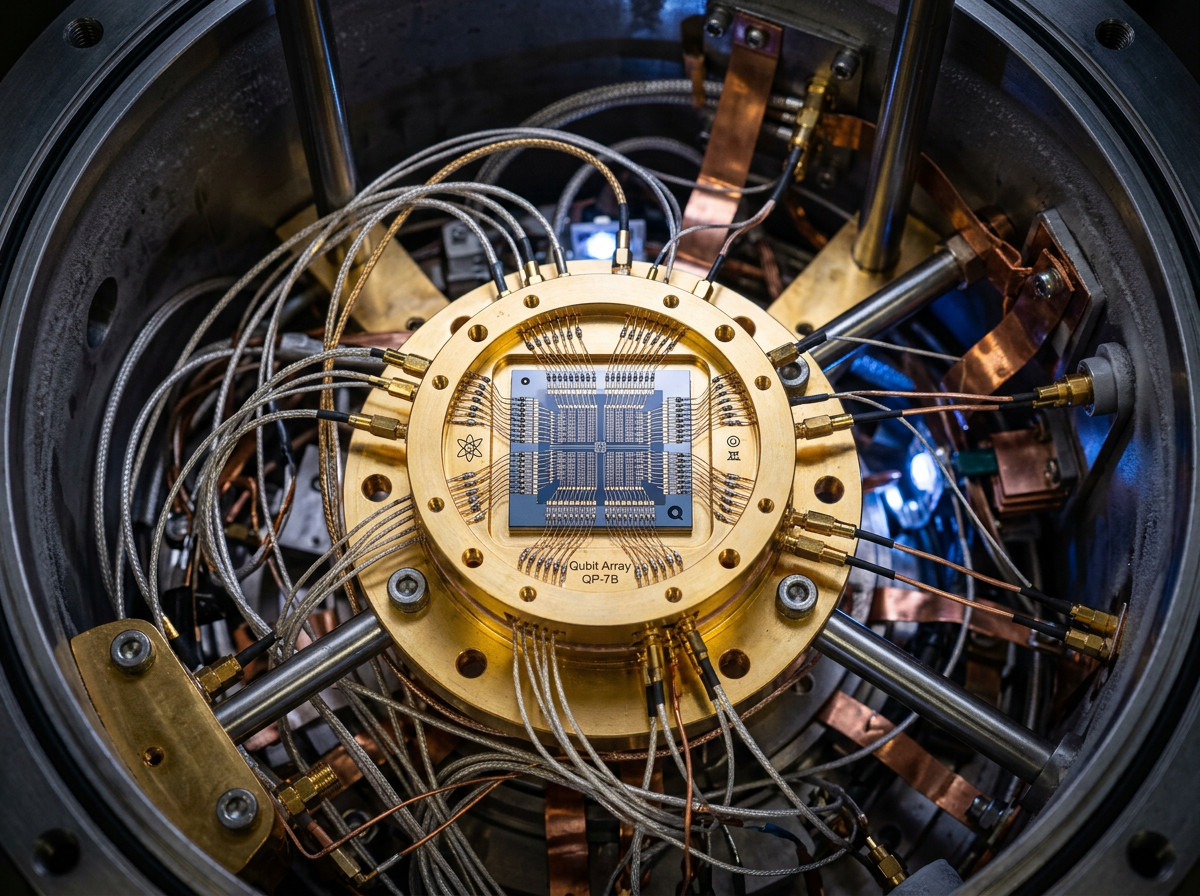
For much of the past decade, the quantum computing industry has been measured by a single metric: qubit count. Every new processor announcement seemed to focus on how many qubits a company had added compared with the previous generation. Over the past month, however, the conversation has continued to shift in a different direction.
The most significant development came from IBM, which announced plans to invest $10 billion in fault-tolerant quantum computing as it works toward a large-scale fault-tolerant system by the end of the decade. Rather than highlighting ever-larger physical qubit numbers, IBM’s roadmap now focuses on logical qubits, modular architectures, quantum memory, and real-time error correction.
This reflects a broader trend across the sector. Google Quantum AI continues to prioritise fault tolerance and logical qubit development, while Quantinuum’s reported preparations for a public listing underline growing investor confidence in companies that can demonstrate a credible path to error-corrected quantum computing rather than simply larger processors.
Meanwhile, Europe continues to pursue a different strategy. Through the EuroHPC Joint Undertaking, quantum systems are now being deployed alongside traditional supercomputing infrastructure across multiple member states. Rather than concentrating investment into a single national champion, Europe is building a distributed quantum ecosystem that integrates quantum processors with existing high-performance computing resources.
Deployment activity is also beginning to matter as much as hardware specifications. IQM’s systems, for example, are now supporting substantial operational workloads, with usage figures demonstrating that organisations are increasingly moving beyond experimentation and into regular access models. The question is gradually shifting from “How many qubits does the machine have?” to “How often is it being used and for what purpose?”
At the same time, work within Europe’s Quantum Flagship programme is helping to establish more meaningful benchmarking frameworks. As different hardware approaches compete across superconducting, trapped-ion, neutral atom and photonic architectures, standardised measures of performance, error correction and workload execution are becoming increasingly important for future procurement decisions.
Taken together, these developments suggest that the industry is entering a more mature phase. The race has not ended, but the metrics are changing. Logical qubits, fault tolerance, system integration, operational utilisation and application readiness are becoming more important indicators of progress than raw physical qubit counts.
TQS Insight
The quantum industry appears to be approaching the same transition that classical computing experienced decades ago. Early development focused on hardware specifications. Mature adoption focused on capability, reliability and operational value.
For enterprise users, governments and investors, this is a significant shift. The winners of the next phase may not be the organisations with the largest processors, but those that can demonstrate stable, error-corrected systems that integrate into real-world workflows.
For cybersecurity, digital identity and trust infrastructure stakeholders, the message remains unchanged: practical quantum computing may still be years away, but the underlying technology is continuing to advance. Post-quantum cryptography migration programmes should be viewed as operational planning exercises rather than future research projects.
The signal this month is quite clear: the industry is steadily moving from bigger quantum computers to better quantum computers.



Leave a Reply