

The launch of Mistral Large 4 marks another significant step in Europe’s ambition to develop competitive artificial intelligence technology. With a frontier-scale model trained on European infrastructure and plans to release its weights publicly, the French company is challenging the assumption that advanced AI must be controlled by American or Chinese providers. Yet the announcement also raises a more fundamental question about technological sovereignty: how much control does Europe really have over the infrastructure, hardware and services on which its AI future depends?
A European challenger takes another step forward
French artificial intelligence company Mistral AI has introduced Mistral Large 4, a new frontier-scale model designed to compete with some of the most advanced AI systems developed in the United States and China. Announced on 6 October, the model represents a significant development for Europe’s ambitions in artificial intelligence, combining advanced reasoning, coding, multimodal capabilities and specialised enterprise applications with an approach intended to give customers greater control over deployment.
Mistral Large 4 is a mixture-of-experts model with approximately one trillion parameters, of which 49 billion are active during processing. According to the company, it delivers competitive performance across coding, agentic workflows, cybersecurity, finance and other demanding enterprise applications. The model is currently available through a public preview, with Mistral planning to release its weights later in October.
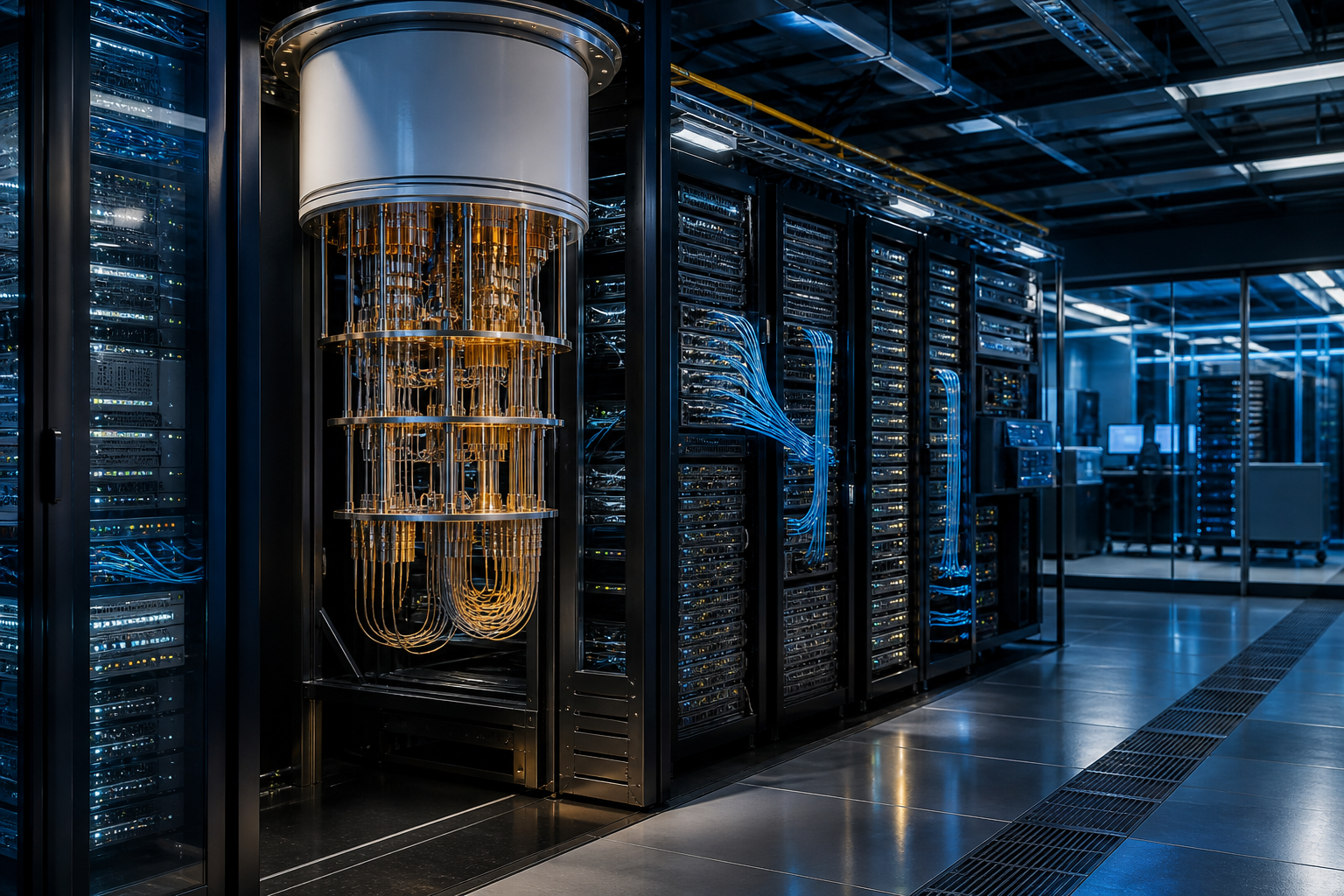
The announcement is particularly notable because of where and how the model was developed. Mistral says Large 4 was trained using 3,800 NVIDIA Grace Blackwell GPUs in its own European data centres, with the public preview also operating on European infrastructure. This provides an important distinction from European AI applications that depend entirely on models and computing services developed and operated elsewhere.
Mistral is positioning the launch as evidence that Europe can develop competitive frontier AI capabilities while offering organisations greater flexibility over how those capabilities are deployed. Although the company’s performance claims will require continued independent evaluation, the development adds weight to the argument that Europe can participate in the frontier-model market as a technology producer rather than simply a customer.
Sovereignty begins with technological capability
For much of the current AI boom, the competitive landscape has been dominated by American technology companies, particularly OpenAI, Google, Anthropic and Meta, alongside a rapidly developing Chinese ecosystem. Their influence extends beyond model performance into cloud infrastructure, development platforms, distribution channels and the computing resources required to train increasingly sophisticated systems.
Europe has taken a different path, placing considerable emphasis on regulation, data protection, fundamental rights and the development of trustworthy AI. The EU AI Act has become a defining feature of that approach, establishing a regulatory framework intended to govern how AI systems are developed and used.
However, regulatory authority and technological capability are different forms of power. Europe may establish the rules governing AI applications within its market, but its ability to influence the underlying technology is more limited if European organisations remain dependent on a relatively small group of external providers.
Mistral’s development therefore carries significance beyond the performance of a single model. Its continued investment in European research, computing infrastructure and model development offers a potential route towards greater technological choice. Rather than relying exclusively on imported AI services, European organisations may increasingly have access to competitive systems developed within their own economic and regulatory environment.
This does not automatically establish European technological independence, but it does strengthen the foundations on which a more autonomous AI ecosystem could be built.
The infrastructure dependency remains
The hardware used to train Mistral Large 4 illustrates both the progress Europe has made and the limitations it continues to face. While the model was developed and trained on European infrastructure, the underlying processors were supplied by NVIDIA, an American company whose technology remains central to much of the global AI industry.
This dependency is not unique to Mistral. Advanced AI development relies on an international network of semiconductor designers, foundries, memory manufacturers, networking specialists, energy providers and software developers. Even organisations operating their own data centres remain exposed to supply-chain constraints and technological dependencies beyond their direct control.
The question for Europe is therefore not whether every component of its AI infrastructure can or should be manufactured domestically. A more practical measure of sovereignty is whether European organisations retain meaningful choices over the technologies they use, the conditions under which they operate and their ability to maintain services when external dependencies become problematic.
Ownership and operation of computing infrastructure represent important elements of that equation. So do access to model weights, the ability to adapt systems for specific requirements and the availability of alternative technology providers.
Mistral’s open-weight strategy is particularly relevant here. By making model parameters available for deployment on infrastructure chosen by customers, the company offers a different proposition from proprietary AI services accessible only through centrally controlled platforms. Organisations may gain greater flexibility over data handling, customisation, operational oversight and long-term deployment decisions.
Nevertheless, open weights should not be confused with complete technological transparency or independence. Access to a model’s parameters does not necessarily provide access to its training data, development processes or the resources required to reproduce it. Running a large model independently also demands substantial technical expertise and computing capacity.
The distinction matters because technological sovereignty ultimately depends on practical control rather than the geographical origin of a product.
From European research to European industry
The commercial implications of Mistral’s development may prove as important as its technical achievements. Europe possesses substantial industrial expertise in automotive manufacturing, energy, engineering, financial services, telecommunications and advanced manufacturing. These sectors increasingly require AI systems that can operate within demanding regulatory, security and operational environments.
Mistral’s emphasis on enterprise applications, including cybersecurity, engineering and financial analysis, suggests that its strategy extends beyond competing for general-purpose chatbot users. Its approach creates opportunities for organisations seeking to integrate AI into established industrial processes while retaining greater control over data, deployment and system behaviour.
The company has also been expanding its European commercial presence and partnerships. Its recent investment round of €3 billion and continued expansion of computing infrastructure indicate an ambition to compete at a scale that would have been difficult for a European AI developer only a few years ago.
For European businesses, however, the decisive question will be whether these capabilities can deliver reliable performance, competitive operating costs and long-term commercial support. Technological sovereignty may be strategically attractive, but organisations will still evaluate AI systems against practical requirements for quality, security, integration and return on investment.
This is where the broader European AI ecosystem becomes important. Competitive models require supporting infrastructure, specialist software, integration partners, skilled personnel and customers prepared to deploy them in production environments. Sustained industrial adoption will ultimately provide a more meaningful measure of progress than individual model announcements.
Digital trust and the question of control
Mistral Large 4 also highlights an increasingly important relationship between AI capability and digital trust. As models become more capable of performing complex tasks, analysing sensitive information and operating within enterprise workflows, questions surrounding permissions, accountability and operational control become more significant.
The company is initially working with selected cybersecurity organisations, partners and public authorities to evaluate the model under conditions that permit broader testing of its capabilities. This reflects the growing challenge facing frontier AI developers: powerful systems may offer considerable defensive and analytical benefits while introducing new risks if their capabilities are misused.
For European organisations, sovereignty and trust are closely connected but should not be treated as interchangeable. A European-developed model is not inherently more secure, reliable or accountable than an alternative developed elsewhere. These qualities depend on technical architecture, governance, operational safeguards and the ability to evaluate and control system behaviour.
Nevertheless, greater choice over model deployment and infrastructure can strengthen an organisation’s ability to establish its own security requirements, manage sensitive information and maintain oversight of AI-enabled processes.
As artificial intelligence moves further into operational decision-making, these capabilities will become increasingly important. The central question is not simply whether Europe can develop advanced AI, but whether European businesses and institutions can deploy it under conditions they understand and control.
Building Europe’s AI future
The introduction of Mistral Large 4 demonstrates that Europe is capable of developing increasingly sophisticated AI technology and competing in areas previously dominated by much larger international providers. It also shows that the continent’s ambitions are extending beyond regulation towards the development of models, infrastructure and commercial ecosystems.
The limitations remain substantial. Computing resources are expensive, semiconductor supply chains are international, and competition from American and Chinese technology companies continues to intensify. Europe’s ability to sustain its progress will depend on investment, industrial adoption and the development of supporting capabilities across the AI technology stack.
Mistral’s latest announcement should therefore be viewed as an important contribution to European technological sovereignty rather than evidence that sovereignty has already been achieved.
The more significant development may be the emergence of credible alternatives that allow European organisations to make meaningful choices about the AI systems on which they increasingly depend. In a market where technological capability, commercial influence and geopolitical interests are becoming closely connected, the ability to choose, deploy and control critical technologies is itself a strategic asset.
Europe’s AI future will not be determined by a single model launch. But Mistral Large 4 provides another indication that Europe intends to play a role in building that future, rather than simply purchasing it from elsewhere.


Leave a Reply