

You’ll Rent One
As quantum computing edges closer to practical usefulness, attention often remains fixed on hardware milestones: qubit counts, coherence times, new architectures. These metrics matter, but they obscure a more consequential shift already underway — one that has less to do with physics and far more to do with economics.
The most likely future for quantum computing is not ownership, but access. Not capital expenditure, but usage-based consumption. In simple terms: most organisations will never own a quantum computer. They will rent time on one.
This outcome is not a business-model preference. It is a direct consequence of what it takes to make quantum systems reliable enough to be useful.
Reliability changes the cost equation
Fault-tolerant quantum computing dramatically alters the scale and complexity of quantum systems. Error correction requires large numbers of physical qubits to create a much smaller set of logical qubits. It also introduces continuous monitoring, classical control layers, and sophisticated software orchestration.
The result is infrastructure that is expensive to build, difficult to operate, and inefficient if lightly used.
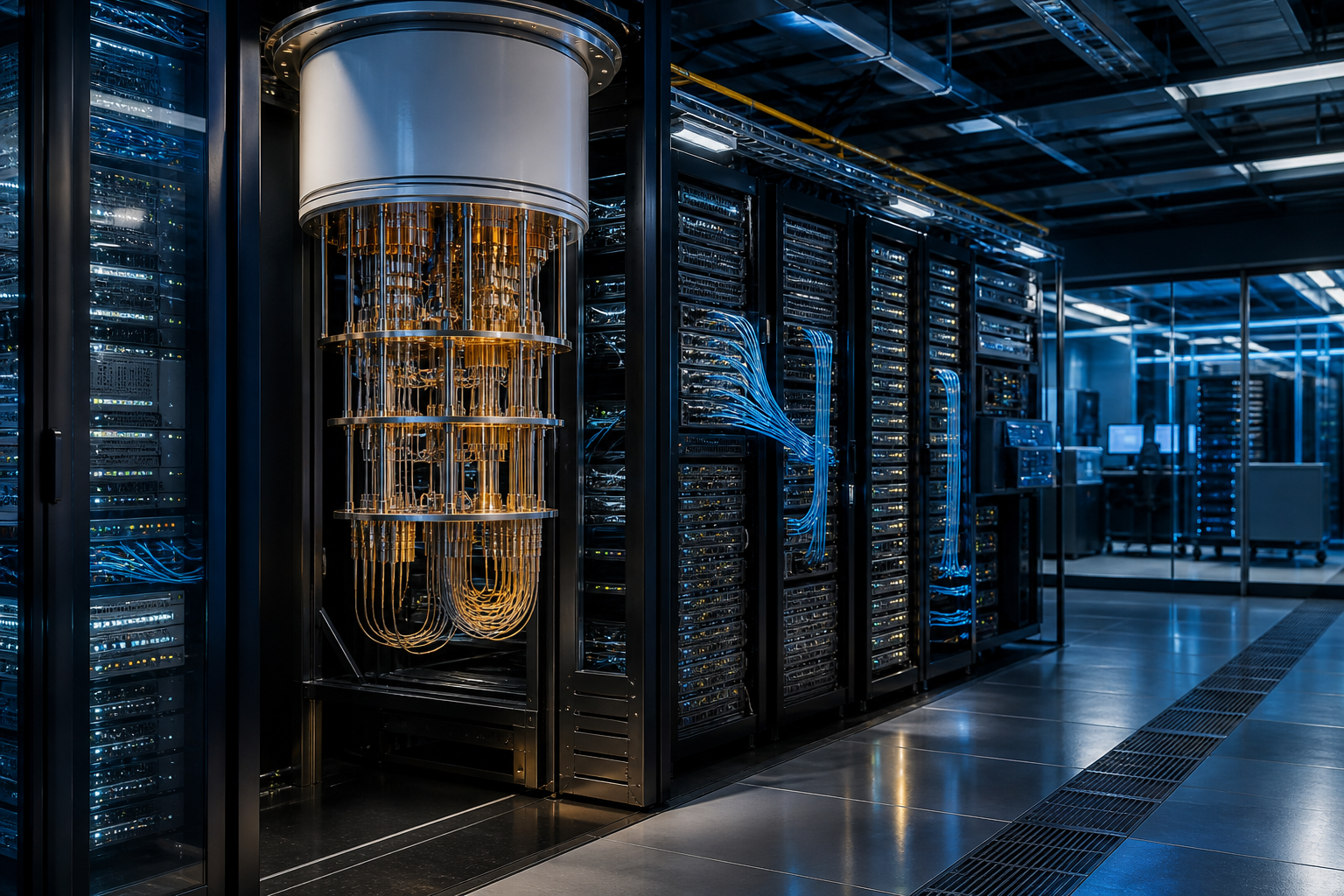
Unlike classical servers, quantum computers cannot simply be powered up when needed and idled the rest of the time. They operate in extreme environments — cryogenic temperatures, tightly controlled electromagnetic conditions — and require specialist teams to maintain stability.
From an economic standpoint, this makes private ownership irrational for all but a very small number of institutions.
Why shared access makes sense
Quantum computing’s value lies in short bursts of highly specialised computation rather than continuous workloads. Most use cases involve experimentation, simulation, optimisation, or algorithm development — tasks that benefit from access rather than permanence.
This naturally favours shared infrastructure models:
- Multiple users accessing the same system
- Workloads scheduled and queued
- Pricing based on runtime, shots, or priority
- Continuous utilisation to justify operating costs
We have seen this pattern before. Supercomputers followed it. GPUs followed it. AI accelerators followed it. Quantum computing is simply the next technology to collide with the same economic reality.
Ownership fades when complexity rises.
Pay-as-you-go is not a convenience feature
Usage-based pricing in quantum computing is often framed as a convenience — a way to lower the barrier to entry. In reality, it is a necessity.
Fault-tolerant systems will be too expensive, too specialised, and too underutilised to justify private deployment at scale. Centralised access allows providers to amortise costs across many users while keeping systems running at high utilisation.
For users, pay-as-you-go access enables experimentation without massive upfront investment. It allows organisations to explore quantum algorithms, validate assumptions, and test workflows without committing to infrastructure they cannot realistically operate themselves.
The trade-off, however, is loss of control.
From ownership to governance
When computing is rented rather than owned, new questions emerge.
- How do organisations predict costs for probabilistic workloads?
- How do they prevent experimental curiosity from turning into uncontrolled spend?
- How do they evaluate return on investment when results are uncertain by design?
Quantum computing complicates these questions further because results are probabilistic, algorithms are still evolving, and performance benchmarks remain fluid.
This is not a reason to avoid pay-as-you-go models. It is a reason to treat them seriously. Quantum computing will require not just new algorithms, but new ways of thinking about cost, governance, and value.
The quiet shift underway
The transition toward rented quantum access is already happening. Cloud-based quantum services, queue-based execution, and usage-tier pricing are becoming the default interface between users and machines.
This is not a temporary phase on the way to widespread ownership. It is the likely end state.
As quantum systems become reliable enough to matter, they also become too complex to distribute widely. The paradox is unavoidable: the more useful quantum computing becomes, the less likely anyone is to own it outright.
Which leads to the final, unresolved question — what happens when reliability, scarcity, and usage-based pricing collide?
That is where the real complexity begins.


Leave a Reply