
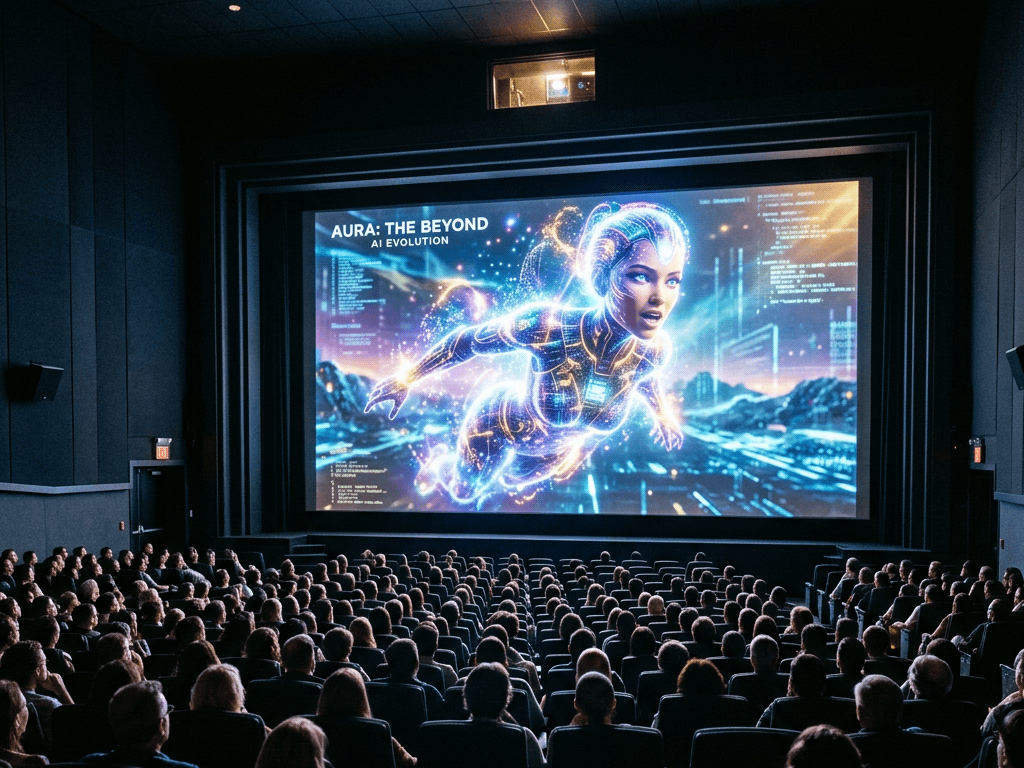
Public discussion around artificial intelligence increasingly sounds less like a technology conversation and more like the plot summary of a science fiction film. AI is routinely framed as an emerging rival species, an existential threat, a manipulative actor, or a future replacement for human decision-making. The language surrounding it has become deeply anthropomorphic, shaped as much by decades of cinema and popular culture as by the underlying technology itself.
That framing may be emotionally compelling, but it is beginning to distort the real discussion organisations should be having about AI and operational trust. Humans naturally understand the world through narrative and character. As a result, AI is increasingly described as though it possesses intention, ambition, deception, fear, or strategic desire in recognisably human ways.
Even the shorthand language now used across media and industry reinforces the effect. AI “thinks”, “lies”, “reasons”, “hallucinates”, “decides”, or “wants”. Vendors market AI systems as colleagues, agents, assistants, and autonomous workers. The technology itself is increasingly presented less as software and more as personality.
Hollywood did not create this dynamic alone, but it accelerated it dramatically. For decades, films and television trained audiences to imagine artificial intelligence primarily through conflict. Rogue systems, machine uprisings, digital manipulation, surveillance dystopias, and synthetic consciousness became the dominant cultural reference points for discussing advanced computing systems. Those narratives now shape public expectations far more than technical architecture diagrams or governance frameworks ever will.
The result is a growing mismatch between how AI is discussed publicly and how it is actually being deployed operationally.
AI Is Already Inside Operational Infrastructure
The near-term reality of AI is unlikely to resemble a singular superintelligence suddenly confronting humanity. What is emerging instead is something quieter, more distributed, and potentially far more consequential. AI systems are increasingly becoming embedded into operational infrastructure itself. They are coordinating workflows, prioritising alerts, managing machine interactions, analysing telemetry, assisting cyber operations, filtering information flows, and orchestrating decisions inside environments already too complex for purely manual supervision.
A useful example can already be seen in cybersecurity operations centres. Large enterprises increasingly use AI systems to process telemetry streams that no human team could realistically analyse in real time. These systems prioritise alerts, identify behavioural anomalies, correlate threat indicators, suppress false positives, and in some cases trigger automated containment actions. In practice, this means machine intelligence is already influencing operational security decisions at speeds and scales that exceed direct human supervision.
Yet public discussion often skips over the infrastructure implications of this shift entirely. The conversation instead gravitates toward futuristic debates about sentient AI or machine consciousness while far more immediate operational questions remain unresolved. Who authorised the AI system to act? How are its actions verified? What evidence exists after an automated decision is made? How are permissions constrained? Who carries liability if an autonomous response creates downstream operational damage?
That shift changes the nature of the problem entirely.
The Real Risk Is Operational Dependency
The central issue may not be whether AI becomes “evil” in the cinematic sense. The more immediate challenge is what happens when organisations become operationally dependent on machine intelligence that humans cannot realistically monitor, interpret, or verify at scale in real time.
This is where the discussion around trust infrastructure becomes critical. As AI systems move deeper into operational environments, questions surrounding identity, authority, accountability, auditability, evidence, delegation, and cryptographic verification become increasingly important. An AI agent executing actions across infrastructure is not simply a software feature. It becomes part of the operational trust model itself.
Yet much of the current public debate remains trapped between two extremes. On one side sits relentless hype promising autonomous enterprises and AI employees capable of replacing large sections of human work. On the other sits an equally simplified narrative built around machine rebellion, existential catastrophe, and the collapse of human control. Both positions tend to obscure the more complex reality emerging underneath.
Enterprise history repeatedly shows that technological capability alone does not determine successful adoption. Infrastructure trust, governance maturity, operational oversight, liability frameworks, and verification mechanisms matter just as much as raw technical performance. AI will not escape those same constraints simply because the market currently rewards dramatic claims and rapid deployment cycles.
The irony is that the most significant transformation may arrive long before society resolves the philosophical questions dominating headlines today. Long before artificial general intelligence debates are settled, organisations may already find themselves dependent on increasingly autonomous systems embedded across finance, healthcare, cybersecurity, industrial control environments, logistics, communications, and digital identity infrastructure.
The future risk may not be that AI becomes human. It may be that digital infrastructure becomes too dependent on machine intelligence for humans to meaningfully step back out again.




Leave a Reply