
How the 2025 Nobel Prize Redefines the Quantum Foundations of AI
On 7 October 2025, the Royal Swedish Academy of Sciences awarded the Nobel Prize in Physics to John Clarke, Michel Devoret, and John Martinis “for the discovery of macroscopic quantum mechanical tunnelling and energy quantisation in an electric circuit.”
When the Royal Swedish Academy honoured Clarke, Devoret, and Martinis for proving that quantum mechanics could live inside an electrical circuit, it wasn’t just a celebration of physics — it was a reminder of where digital sovereignty really begins. From macroscopic quantum tunnelling to superconducting qubits, this year’s Nobel Prize traces the circuitry that powers our AI future. For Europe, it’s a signal: sovereignty starts at the quantum layer.
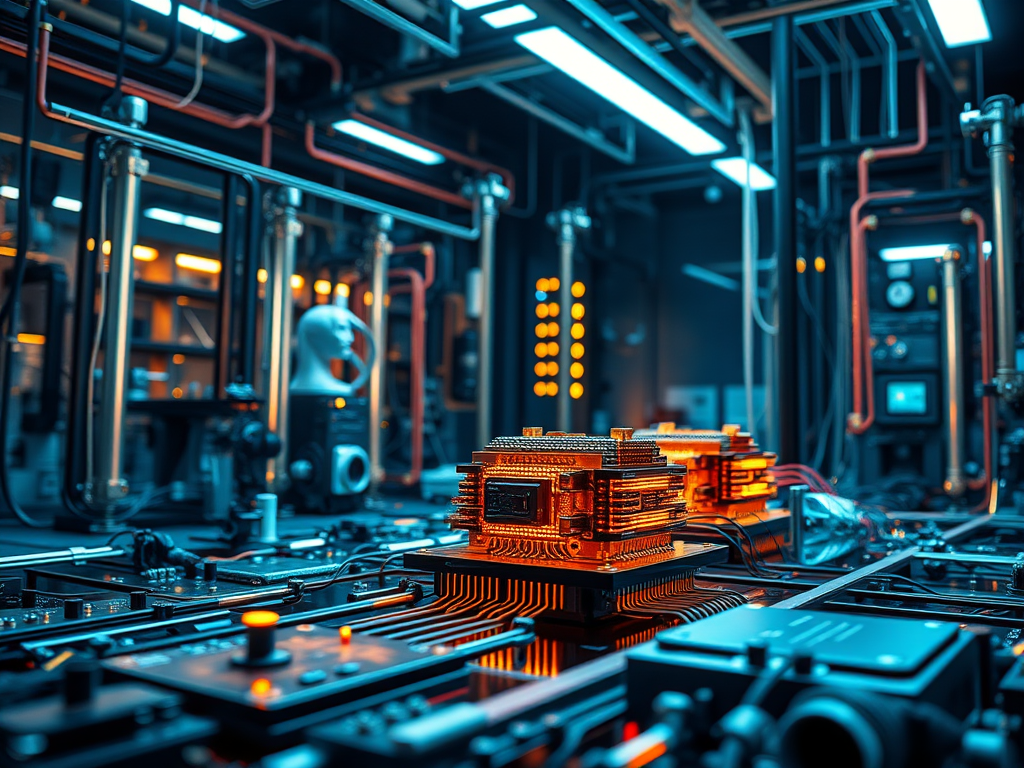
It was a quiet phrase for a radical shift. Four decades ago, their experiments in superconducting circuits at the University of California, Berkeley proved that quantum behaviour—the same fragile mathematics governing atoms—could persist in devices visible to the naked eye. Their circuits, cooled close to absolute zero and built around Josephson junctions, exhibited energy levels that changed not continuously but in discrete quantum steps.
That moment marked the birth of macroscopic quantum physics: a bridge between the microscopic weirdness of quantum mechanics and the engineered world of electronic devices. The laureates showed that an electrical circuit could be both engineered and quantum. Today, the same physics underpins nearly every superconducting-qubit processor on Earth.
The Physics That Built the Future
The experiments that earned the prize were not glamorous by modern standards—no cloud dashboards, no AI accelerators—but their implications remain enormous. By manipulating superconducting loops carrying millions of Cooper pairs, Clarke’s group demonstrated quantised energy transitions identical to those observed in atomic systems.
That proof enabled a generation of devices now central to the quantum economy: superconducting qubits, fluxonium and transmon architectures, SQUID sensors, and even the error-correcting logical qubits that IBM, Google, and others chase today. The laureates’ work made it possible to fabricate “artificial atoms” on a chip, to control their quantum states with microwave pulses, and to read them out electronically.
In a direct lineage, Devoret went on to Yale and then to Google’s Quantum AI programme, where his designs for fluxonium-based qubits underpin next-generation superconducting processors. Martinis led Google’s hardware team through its 2019 “quantum supremacy” demonstration. Clarke remained the field’s quiet architect, continuing to refine superconducting measurement at Berkeley.
The Nobel Committee did not just honour a discovery—it recognised a technological civilisation built atop it.
Europe’s Quantum Awakening
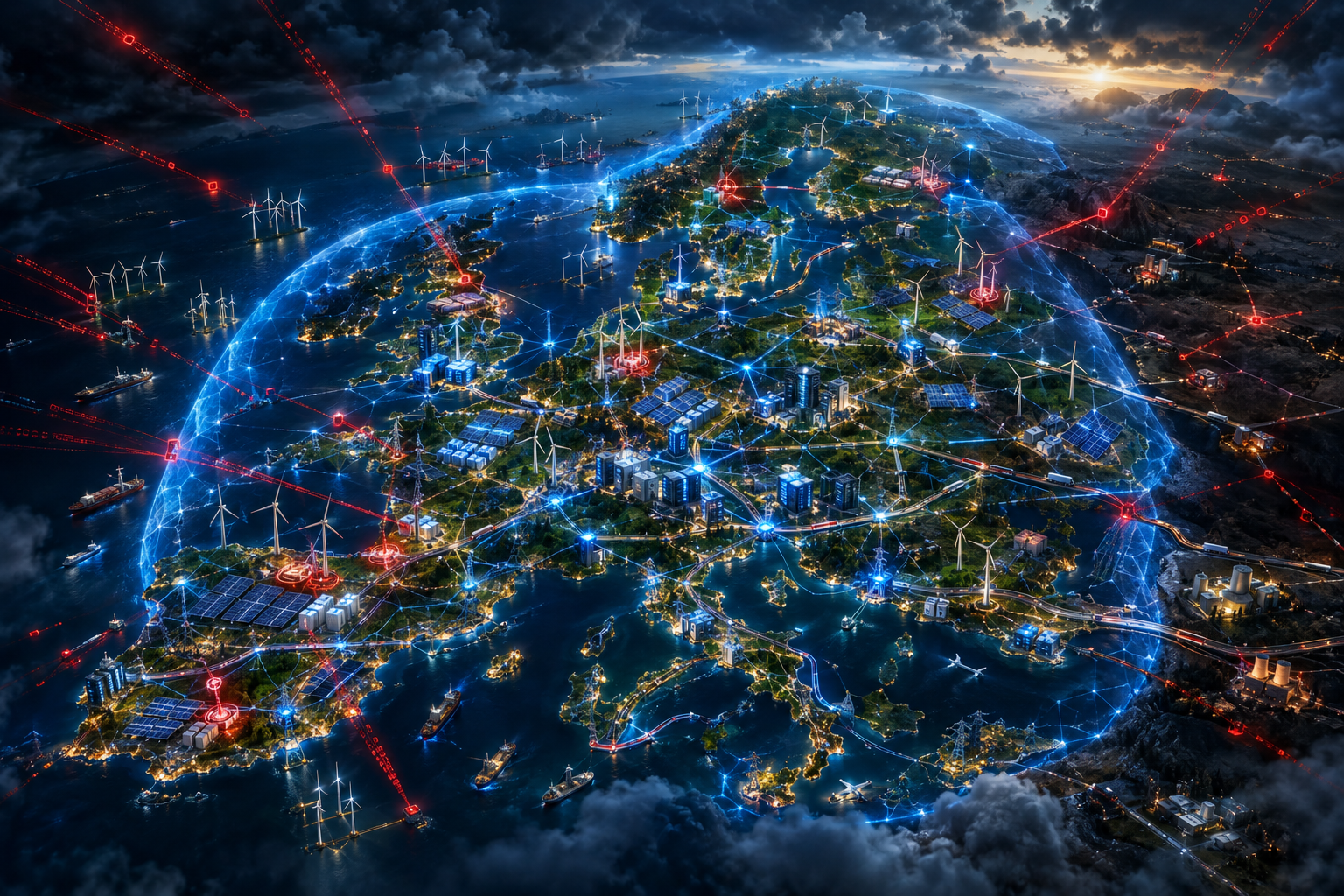
For Europe, the timing of this Nobel Prize is striking. In Brussels and Berlin, policymakers are talking less about cloud sovereignty and more about AI sovereignty—the ability to control the infrastructure, data, and algorithms that drive the next phase of digital life. Yet beneath that conversation lies a harder truth: sovereignty in AI depends on sovereignty in physics.
The hardware that powers generative AI, high-performance computing, and emerging quantum systems is still overwhelmingly designed and fabricated outside the EU. The superconducting architectures that the Nobel celebrated are American. The leading trapped-ion and photonic firms are mostly U.S. or U.K. funded. Europe’s own quantum champions—IQM, Pasqal, Quandela—remain exceptional rather than dominant.
That imbalance is precisely what the European Commission’s EuroHPC Joint Undertaking and Chips Act attempt to address. By funding exascale supercomputers and domestic semiconductor fabrication, the EU is trying to ensure that the physics of the digital age—silicon, photonics, superconductivity—lives on European soil.
Germany’s decision earlier this year to pursue a sovereign deployment of OpenAI’s model, operating under domestic legal and compliance frameworks, was a political echo of the same idea. Control the substrate, or lose control of the outcome.
The Sovereignty Paradox
Europe leads the world in regulation: the AI Act, NIS2, the Cyber Resilience Act, and DORA collectively define what trustworthy technology should look like. But trust cannot exist without ownership of the stack. The Nobel Prize inadvertently exposes the gap between Europe’s regulatory sophistication and its physical dependence.
If the foundational qubit technologies originate in U.S. labs and are refined by American cloud providers, Europe risks building its “sovereign” AI atop someone else’s physics. The result would be compliance without autonomy—a digital sovereignty that ends at the circuit board.
Hence the emerging conversation around physics sovereignty. It is the recognition that mastery of the physical sciences—materials, cryogenics, photonics, quantum control—is not academic nostalgia but a strategic necessity. In the same way that Europe once realised it needed its own satellites, it must now ensure that it can build and maintain the quantum and AI processors on which future economies will depend.
Lessons for the Quantum-AI Era
The Nobel Prize to Clarke, Devoret, and Martinis is therefore more than a historical tribute. It is a reminder that the path to sovereign AI runs through laboratories, not just legislation. The laureates’ patient experiments in cryostats and coaxial cables show that innovation is cumulative, physical, and local.
Europe’s investments in EuroHPC, Gaia-X, and the EUDI Wallet are essential steps toward a trusted digital infrastructure. But sovereignty cannot be achieved by software abstraction alone. To claim independence in AI and quantum, Europe must pair its regulatory muscle with sustained investment in deep physics: superconducting foundries, quantum-grade fabrication lines, and open-access testbeds.
The lesson of this Nobel is that the greatest breakthroughs in digital trust begin with atoms and electrons. Without that grounding, sovereignty remains a policy aspiration floating on foreign hardware.
Closing Reflection
The Nobel Prize in Physics 2025 rewinds the clock to the moment when quantum mechanics left the chalkboard and entered a circuit. It reminds us that every layer of our digital world—from AI inference to encrypted communication—rests on that same physical substrate.
For Europe, the message is clear. Sovereign AI will not be secured through regulation alone. It will depend on whether the continent can command the physical sciences that make intelligence, computation, and security possible. The discovery that won this year’s Nobel built the bridge between theory and technology. The next challenge is to ensure that Europe can stand on it.
Physics remains the new firewall. Sovereignty begins at the quantum layer.
Sources
- Royal Swedish Academy of Sciences, Nobel Prize in Physics 2025 Press Release, October 2025.
- Reuters, Clarke, Devoret and Martinis win 2025 Nobel Prize in Physics, 7 Oct 2025.
- Le Monde, Michel Devoret: “The quantum computer is not here yet.”, 8 Oct 2025.
- Scientific American, How Macroscopic Quantum Tunnelling Changed Physics, October 2025.
- European Commission, Chips Act (2023); EuroHPC JU Strategic Agenda 2025; AI Act Final Text 2025.



Leave a Reply