
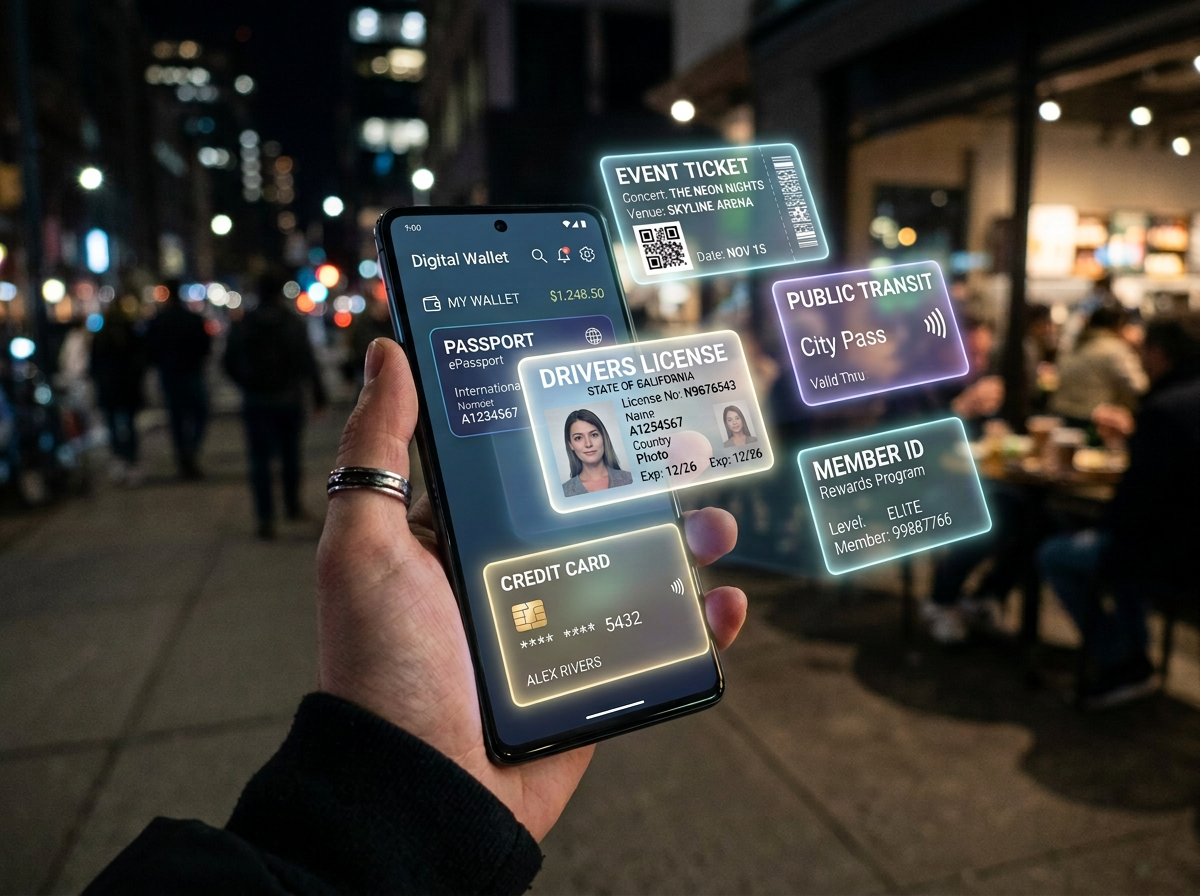
Germany’s EUDI Wallet sandbox is expanding beyond basic digital identification to support Electronic Attestations of Attributes, allowing organisations to test credentials including professional qualifications, academic degrees and driving licences. The shift illustrates something important about Europe’s digital identity programme: the wallet is developing from a means of proving who someone is into an infrastructure for proving trusted facts about people and organisations.
For much of the discussion around the European Digital Identity Wallet, the emphasis has understandably been on identity. The ambition is to give citizens and businesses across the European Union a secure and interoperable way to identify themselves digitally when accessing public and private services. That remains fundamental, but identity may ultimately prove to be only the first layer of what the wallet becomes.
Germany’s EUDI Wallet project is beginning to demonstrate why. Its national sandbox now supports the testing of Electronic Attestations of Attributes, or EAAs, alongside Person Identification Data. These digital credentials can include information such as professional qualifications, university degrees and driving licences, which users will eventually be able to store and present through their wallet.
The distinction may sound technical, but it changes the role of the wallet considerably. Instead of simply establishing who someone is, digital services can increasingly use the wallet to establish what that person can prove about themselves.
From identity to trusted attributes
Person Identification Data provides the foundational identity layer, establishing information such as an individual’s name, date of birth or other identifying data through an authoritative source. Electronic Attestations of Attributes build on that foundation by allowing additional facts, qualifications or entitlements to be represented digitally and presented when required.
An attribute could confirm that somebody holds a particular qualification, possesses a valid driving licence, belongs to an organisation or has another recognised status. The European Commission describes EAAs as digital documents capable of being added to, stored in and presented from an EUDI Wallet, with examples including university diplomas, boarding passes and driving licences.
This creates a considerably broader trust model. A recruitment platform, for example, may not simply need to establish the identity of an applicant. It may also need reliable proof that the applicant holds a particular degree or professional qualification. A car rental company needs more than a customer’s name; it needs confirmation of a valid driving entitlement. A financial service may require identity information together with other verified attributes before providing access to a service.
Today, many of these processes still rely on separate databases, uploaded documents, manual checks or repeated identity verification. The wallet model is intended to make trusted information more portable while giving the user greater control over what information is actually disclosed.
Germany moves the sandbox forward
Germany’s EUDI Wallet Sandbox is designed as a realistic test environment in which public authorities and private organisations can develop integrations using sample data before the national wallet enters production. The expansion into EAAs means participating organisations can now operate on both sides of the credential relationship, testing the issuing of digital credentials as well as their verification by relying parties.
Germany is also allowing organisations to define their own credential types within the sandbox, including examples such as digital membership credentials and educational certificates. This matters because the usefulness of the wallet will never be determined solely by whether governments succeed in producing the application itself. Its real value will depend on what citizens and businesses are actually able to do with it.
A wallet containing an identity credential but accepted by relatively few services remains primarily an electronic identity card. A wallet capable of presenting trusted qualifications, licences, entitlements and organisational credentials across hundreds or thousands of public and private services becomes something much more significant. At that point, it begins to resemble a layer of digital trust infrastructure rather than simply another method of identification.
The relying party question
This is why relying parties are becoming one of the most important parts of the EUDI discussion. The European Commission has begun a dedicated Relying Party Engagement Programme aimed at organisations in sectors including travel, hospitality, education and public services, reflecting the simple reality that the wallet only creates value if people can use it with the services they depend upon.
That shifts attention away from the wallet as a government technology project and towards the wider ecosystem surrounding it. Banks, universities, employers, mobile operators, hotels, transport operators, healthcare providers and digital platforms all potentially become participants. Some may issue credentials, others will consume them, and many organisations may eventually do both.
The Commission’s existing pilot work already covers use cases including opening bank accounts, SIM registration, mobile driving licences, electronic signatures, prescriptions, travel, payments, educational qualifications, organisational digital identities and access to social-security benefits. The breadth of these use cases suggests that Europe is not merely building another authentication mechanism. It is attempting to establish a common trust framework within which verified information can move between citizens, credential issuers and service providers.
Proving only what is necessary
There is another important aspect to this model: selective disclosure. Traditional identity processes frequently collect more information than the transaction actually requires. Someone proving that they are over a particular age, for example, may present an identity document containing their full name, address, exact date of birth, photograph and other information, even though most of that data is irrelevant to the transaction.
A digital credential architecture can potentially reduce that unnecessary disclosure. The European Commission describes the EUDI Wallet as enabling users to transmit specific information to verified entities while withholding unrelated personal data. A service could therefore receive confirmation of a relevant attribute rather than receiving the entire collection of personal information from which that attribute was derived.
This principle becomes particularly important as digital identity is connected to increasingly sensitive services. Trust is not created simply by collecting more verified information. In many cases, it can be strengthened by establishing exactly what needs to be verified while exposing as little additional information as possible.
That brings privacy and identity assurance into the same architecture rather than treating them as competing objectives.
The wallet becomes part of the trust stack
The EUDI Regulation requires Member States to make digital identity wallets available by the end of 2026. Those wallets will be based on common technical specifications intended to support security, interoperability and mutual recognition across the European Union.
As that deadline approaches, however, the more interesting question is shifting from whether Europe can build the wallets to whether it can build the ecosystem around them. That ecosystem requires trusted issuers, reliable credentials, interoperable standards, secure wallet implementations and services prepared to accept and verify the information they receive. It also needs governance capable of establishing who is entitled to assert particular attributes and how those assertions can be trusted across borders.
A university can assert that somebody has earned a degree. A government authority can issue a driving entitlement. An employer may attest that someone holds a particular position within an organisation. Each assertion has value because it originates from an entity authorised or trusted to make it, and the wallet provides a mechanism through which those assertions can increasingly travel with the user. That is a much more powerful proposition than digital identification alone.
Identity is only the beginning
The EUDI Wallet is sometimes described as Europe’s attempt to put the identity card onto a smartphone. That description increasingly understates what is being built. The underlying ambition is closer to creating a portable trust environment in which identity establishes the individual, attributes establish trusted facts surrounding that individual, and relying parties turn those facts into access to real services.
Germany’s expansion of its sandbox into Electronic Attestations of Attributes is therefore more than another technical milestone on the EUDI roadmap. It provides a clearer view of where the wallet architecture is heading as the European rollout approaches.
The success of the EUDI Wallet will not ultimately be measured simply by how many Europeans install one. It will be measured by how many useful and trusted things they can prove with it.




Leave a Reply