

A cold war warms up.
Cyberattacks on supermarket refrigeration have exposed a digital dependency hiding in plain sight. Behind familiar freezer cabinets sit connected control systems, remote maintenance arrangements and a question that reaches far beyond food retail: who is responsible for keeping ordinary equipment secure throughout its working life?
Most of us walk past supermarket freezers without giving their operation a moment’s thought. We check the price, pick up the frozen peas and trust that everything has remained cold. Few shoppers have reason to consider whether the equipment is connected to a network, whether a contractor can change its settings remotely, or whether the software controlling it still receives security updates.
The recent attacks on European refrigeration systems have brought those questions onto the shop floor. Following incidents in France in October, further disruption was reported across several European countries in early November. German reporting on 3 November included affected supermarkets in North Rhine-Westphalia and Bavaria, where food had to be discarded. A business buying refrigeration had also acquired a digital dependency — one whose failure could destroy the stock it was supposed to protect. [1]
The perpetrators and their motives remain unconfirmed. Whether the incidents form a single coordinated campaign is also unresolved. The immediate lesson, however, does not depend on attribution: access to refrigeration controls can produce physical and commercial consequences long before an investigation establishes who was responsible. [2]
The network behind the cabinet
The first surprise is that the freezer is part of a wider system. Commercial refrigeration can use supervisory controllers to coordinate equipment, monitor temperatures and give service providers remote access. Arrangements differ between stores and chains; there is no single universal hub connecting every supermarket freezer.
For operators, these capabilities have an obvious purpose. A refrigeration contractor can investigate a fault without first travelling to the store, and monitoring can help identify problems before stock is lost. Connectivity supports the service the business needs.
But it also changes what must be protected. Alongside the compressor, seals and electrical supply sit software, credentials and routes for remote access. The cabinet on the shop floor looks familiar even as its supporting infrastructure becomes more complex.
The television series Silicon Valley found comedy in connected refrigerators. A supermarket disposing of its chilled and frozen stock offers a rather less entertaining version of the premise. Ordinary equipment becomes a consequential cyber target when someone can reach the controls that determine how it behaves.
A setting is not a temperature
The reporting also needs care. An attacker setting a controller to 50°C does not establish that the food or cabinet actually reached that temperature. What matters is what the equipment did, how long the conditions persisted and whether the cold chain remained intact.
An incident at Estonia’s Selver supermarket chain illustrates the distinction. According to reporting by public broadcaster ERR, attackers changed a freezer setting to 50°C, but the refrigeration partner intervened within approximately ten minutes. The actual temperature rose by only two to three degrees, and the retailer reported no product damage. [3]
That example matters because it shows the outcome was not inevitable. Detection and intervention prevented a malicious instruction from becoming a stock loss. It also raises a useful question for other operators: how much time would they have between an unauthorised change and an irreversible consequence?
The responsibility between the contracts
The wider issue is how responsibility is allocated. A supermarket may own the installation, a specialist contractor may maintain it, and another company may manufacture the controller. Each relationship can be perfectly familiar commercially while leaving security obligations insufficiently clear.
Who knows which controllers remain supported? Who approves remote access and removes it when contracts change? Who checks that a service connection remains secure? When a warning arrives, who has both the authority and the budget to act?
These questions do not establish the cause of every recent incident. They identify what a business needs to understand before it can judge its own exposure. Buying a managed service should make those responsibilities explicit; it should not require the customer to discover them during an emergency.
France’s CERT-FR had already confirmed compromises affecting refrigeration controllers from several manufacturers in October. Its recommendations included removing direct internet exposure, securing remote access and applying available updates. It also warned that resetting unsupported, vulnerable equipment would not prevent it from being compromised again. [4]
This was therefore a recognised security problem. The uncomfortable question is how warnings translate into action across an estate of equipment, service contracts and competing operational demands.
Working equipment, ageing support
Commercial equipment is judged heavily by whether it still performs its job. Replacing a controller in a functioning refrigeration installation can be a difficult expenditure to justify when the visible result is simply that everything continues to work.
Yet mechanical usefulness and software support follow different timelines. A business can be satisfied with an installation’s cooling performance while needing to reconsider how its controls are maintained and accessed. Security expenditure may involve an upgrade, a protected maintenance connection or replacement of unsupported components, rather than replacement of the entire installation.
The decision belongs in procurement and maintenance planning. Buyers need to know how long security updates will be available, what happens when support ends and which party is responsible for managing that transition. Those answers should be part of the cost of operating connected equipment.
Recovery has a shelf life
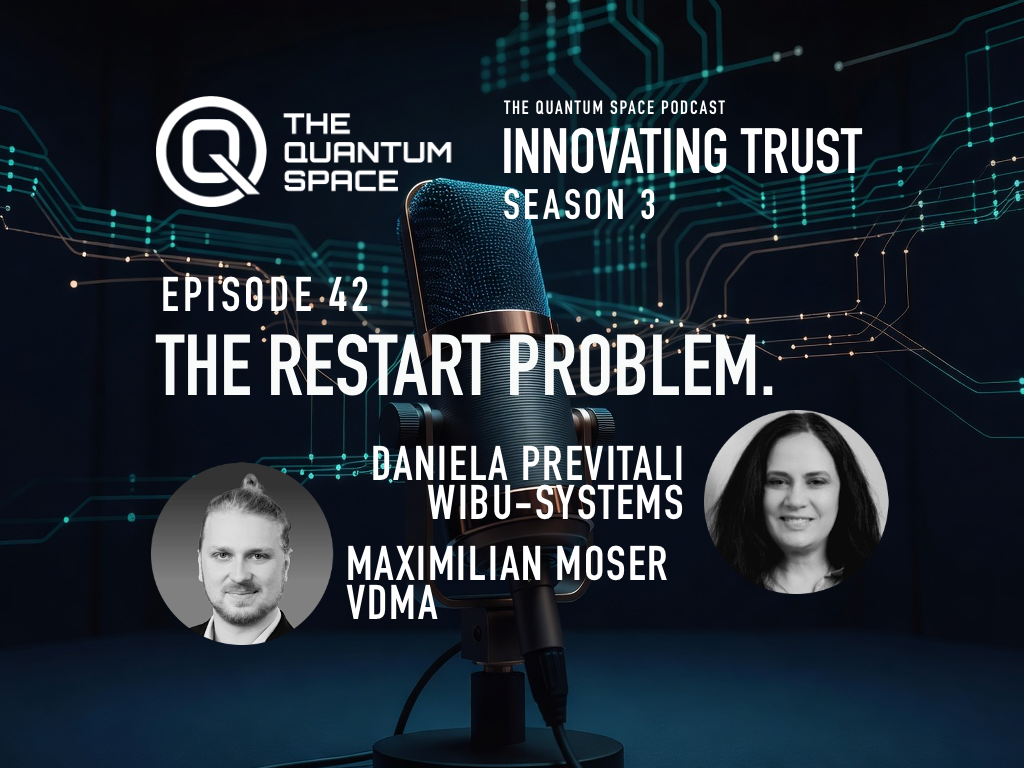
In last Thursday’s Innovating Trust episode, The Restart Problem, we examined the challenge of recovering industrial operations after disruption. Supermarket refrigeration makes one dimension of that challenge particularly clear: recovery is governed by the physical process as well as the computer system.
Access can be restored, controls reconfigured and cooling resumed. Whether the stock can still be sold is a separate question. A successful technical recovery may arrive after the business has already suffered an irreversible loss.
You can restart the refrigeration system; you cannot restart the shelf life of its contents. That is why monitoring, escalation and the ability to intervene locally deserve attention alongside measures intended to prevent access in the first place.
A Russian connection emerges
The question of who is behind the attacks has taken a significant turn. On 4 November, two pro-Russian hacktivist groups, NoName057(16) and Z-Pentest Alliance, claimed responsibility for the coordinated disruption of refrigeration systems across Europe. Both have previously been linked by US authorities to networks allegedly funded by Russian military intelligence, although their claims remain unverified and their Telegram statements have since been deleted. Cybersecurity researchers have identified similarities with earlier Russian-linked operations, but alternative explanations have not been ruled out.
Whether this represents a coordinated campaign of state-sponsored disruption or opportunistic exploitation of poorly secured industrial systems remains unresolved. What is increasingly clear, however, is that relatively simple vulnerabilities in everyday infrastructure can be exploited to cause widespread economic damage and undermine public confidence in essential supply chains.
Perhaps the most disturbing development came in France, where the same wave of refrigeration attacks reached three facilities operated by the French national blood service (EFS). Hackers compromised systems belonging to a refrigeration supplier, manipulating temperature and defrost settings at facilities storing blood plasma and other vital medical products. Independent monitoring alarms alerted staff before any supplies were lost, allowing the affected products to be secured or transferred.
Although investigators have yet to establish whether the same perpetrators were responsible for the supermarket and medical incidents, the implications are considerably more serious. What began as a story about spoiled food and commercial losses now raises questions about the vulnerability of healthcare infrastructure. When connected industrial systems become targets, the consequences can extend far beyond financial damage, potentially threatening the essential services on which human lives depend.
The vulnerabilities hiding in plain sight
For cybersecurity specialist Christoph Fischer, (Managing Director of Karlsruhe-based cybersecurity consultancy BFK edv-consulting GmbH) the most troubling aspect of these attacks is not their sophistication, but the apparent absence of basic security precautions. “The freezers in the supermarkets are just a tiny fraction of all the systems out there, that have static passwords and ‘out of the box’ settings,” he told The Quantum Space.
Fischer points out that the risks associated with weak authentication and default configurations have been understood since the 1980s. He argues that internet-facing industrial systems should be protected by stronger authentication mechanisms, including digital certificates and asymmetric cryptography. The problem is compounded when equipment operates with little supervision or adequate logging, making incident detection and subsequent investigation considerably more difficult.
More worrying still is Fischer’s observation that systems far more critical than supermarket freezers are exposed to the internet and can be discovered through services such as Shodan. Such discoverability does not automatically mean a system is vulnerable, but it illustrates the extraordinary visibility of infrastructure that was never designed with today’s threat environment in mind.
The attempted attacks on French blood-storage facilities demonstrate precisely why this matters. The question is no longer simply whether connected systems can be compromised, but how much damage they might cause before anyone notices.
Ordinary equipment, explicit responsibility
It would be a mistake to treat these incidents as an argument against remote monitoring or connected machinery. The Selver example shows how a prompt response can protect stock. The task is to make connectivity dependable enough for the physical service that relies on it.
For business leaders, the starting point is surprisingly basic: identify which everyday systems are connected, establish who can control them and make someone accountable for keeping those arrangements secure. Refrigeration offers an accessible example, but the same questions belong wherever software controls a physical operation.
The freezer cabinet has become a reminder that digital trust extends well beyond the office network. Customers expect the food to remain cold; the businesses supplying it need to know who is protecting the controls.
Sources
[1] Tagesschau, 3 November 2026: https://www.tagesschau.de/inland/cyberangriffe-supermarkt-hacker-100.html
[2] Reuters, 2 November 2026: https://www.reuters.com/business/retail-consumer/temperature-soars-swedish-grocery-store-freezers-one-store-blames-hackers-2026-11-02/
[3] ERR, 2 November 2026: https://news.err.ee/1610183296/hackers-raised-freezer-temperature-at-selver-supermarket-to-50-c
[4] CERT-FR, alert first published 12 October, updated 16 October 2026: https://cert.cyber.gouv.fr/alerte/CERTFR-2026-ALE-012/


Leave a Reply